
How a bill becomes law: from parliamentary proposal to implementation
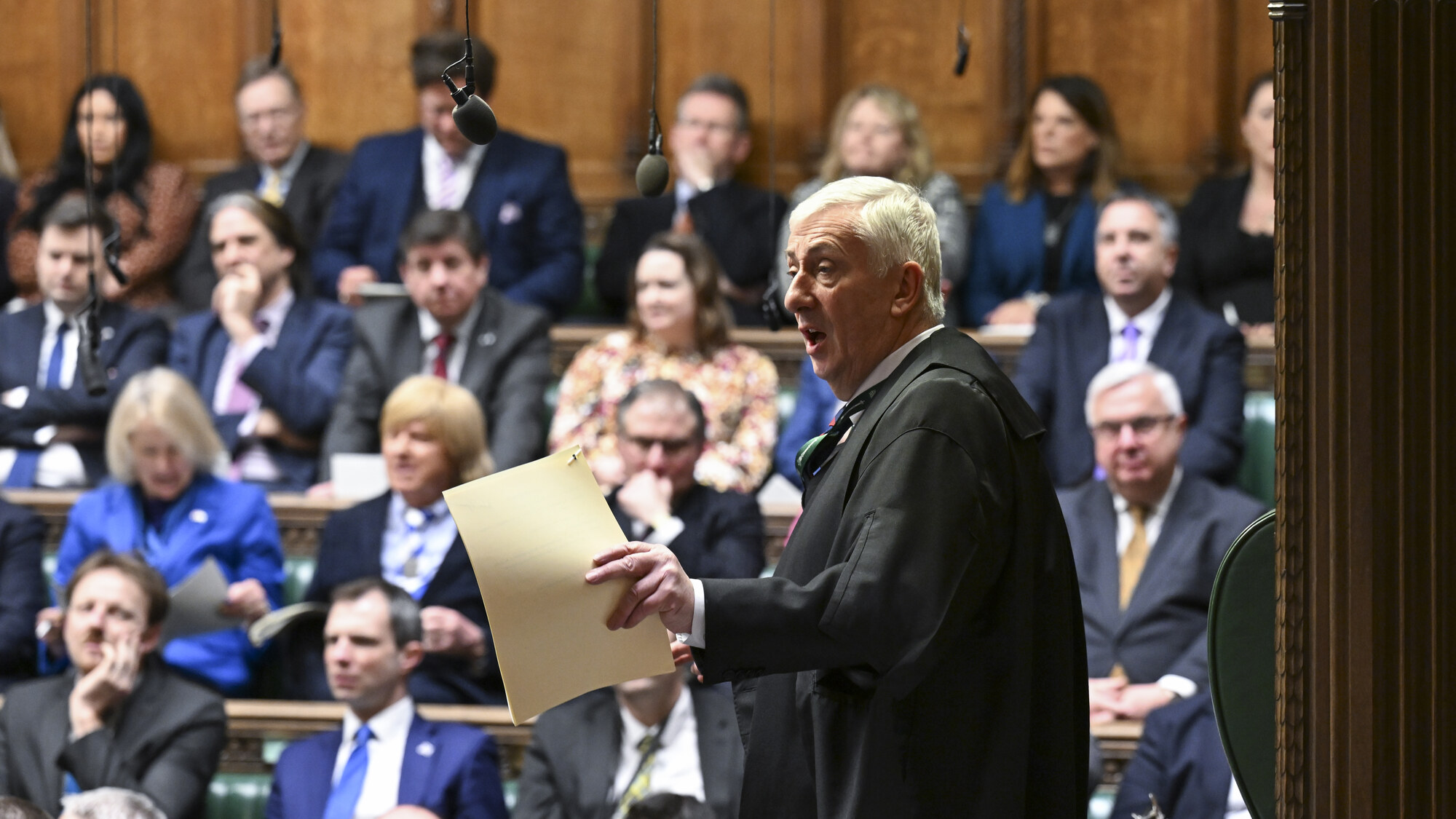

Understanding how a bill becomes law means distinguishing a proposed change from a rule already in force. A bill is a proposal for a new law or a change to existing law. In the ordinary parliamentary process, both Houses consider the proposal before Royal Assent makes it law.
Explainer | Sources checked 4 October 2026.
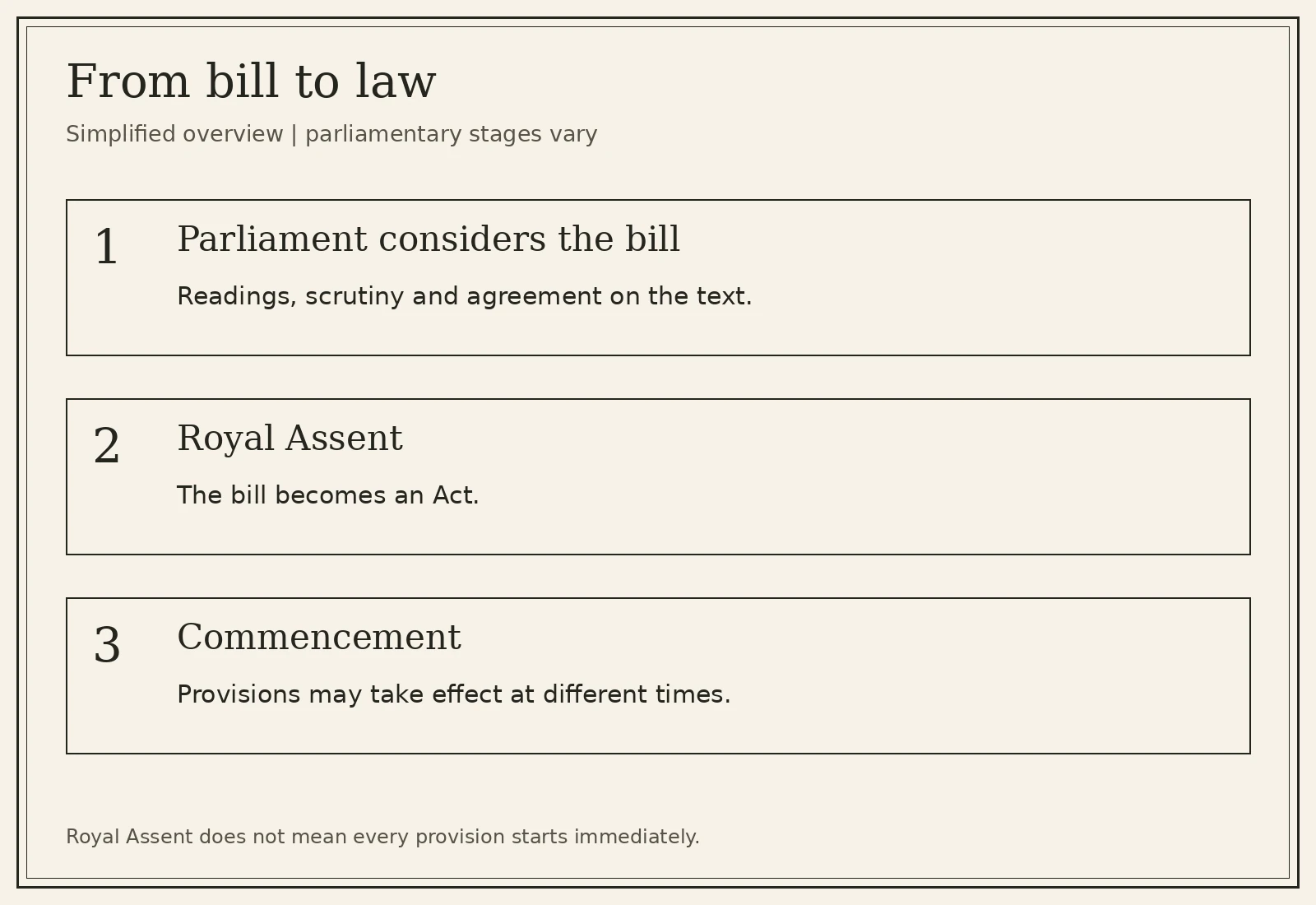
Text version of the diagram: How a bill becomes law: parliamentary consideration, Royal Assent and commencement.
How a bill becomes law: the parliamentary stages
First reading formally introduces the bill without a debate. Second reading considers its general principles. Committee stage examines the detail, and report stage gives the House a further opportunity to consider amendments. Third reading is the final stage in that House. Each stage in how a bill becomes law has its own purpose.
Most bills can start in the Commons or the Lords. Some, including bills whose main purpose is imposing taxation, must begin in the Commons. The procedure also differs between the Houses: for example, amendments are not possible at Commons third reading, while the Lords can consider tidying-up amendments.
The same text, not simply two votes
When the second House changes a bill, the first must consider those changes. The proposal can move between the Houses while they try to agree its wording, a process often called parliamentary ping-pong. The ordinary route requires agreement on the text, not merely support for two differently worded versions. How a bill becomes law depends on both Houses agreeing the same wording.
This is an outline of the usual process for public bills. Special procedures and exceptions exist; a particular bill's official parliamentary record is the place to check its position.
How a bill becomes law, and when it takes effect
Royal Assent turns a bill into an Act, but its provisions may start operating later. The Cabinet Office explains that commencement can be set for a period after assent or a date fixed by government. Regulations may be needed to supply further detail.
To understand what a proposed change means now, check both the bill's stage and, once enacted, the relevant commencement provisions. An announced policy, a parliamentary vote and a rule currently in force are three different things.
How a bill becomes law: what the papers can tell you
A bill's title is only the start. The parliamentary record identifies the current version and stage, while explanatory notes provide context for its clauses. The Cabinet Office describes these notes as material published alongside the bill. Reading the proposal itself remains important: a summary of its intended effect is not the same as the wording Parliament is being asked to approve.
Who brings a bill forward?
Government bills represent policy introduced by ministers. Other proposals include Private Members' Bills brought by members who are not acting for the government. A proposal's source can help explain its place in the legislative programme, but it does not turn its provisions into current law. A government announcement still needs to be distinguished from legislation that has completed its passage. Knowing who introduced it helps explain how a bill becomes law.
The Cabinet Office guide also distinguishes primary legislation, including bills and Acts, from secondary legislation. An Act may delegate powers to a minister to make regulations, orders or rules. This means the headline policy may be set in one document while important operational details appear in another. Checking only the original bill can miss later provisions that determine how a scheme works.
The UK is not one undifferentiated jurisdiction
The government guidance notes that proposals affecting Scotland, Wales or Northern Ireland may require consultation with devolved administrations. Provisions concerning devolved matters will usually need the relevant legislature's consent. Readers should therefore check where a measure extends and applies, rather than assuming that a Westminster proposal has an identical practical effect in every part of the UK.
Track the stage and the start date
A report about how a bill becomes law should therefore identify both its parliamentary stage and any start date.
For a reader following a policy, a useful record is the bill's current stage, the version being debated, and any proposed amendments. After assent, check the Act and its commencement arrangements. Parliamentary progress and implementation answer different questions: one concerns whether lawmakers have approved the measure, the other concerns when people and organisations must act on it.
Sources
Related explainers
- NATO Article 5: what collective defence commits members to do
- Lower inflation: why it does not necessarily mean lower prices
- Flood warnings: understanding alerts, warnings and your flood plan