
Flood warnings: understanding alerts, warnings and your flood plan
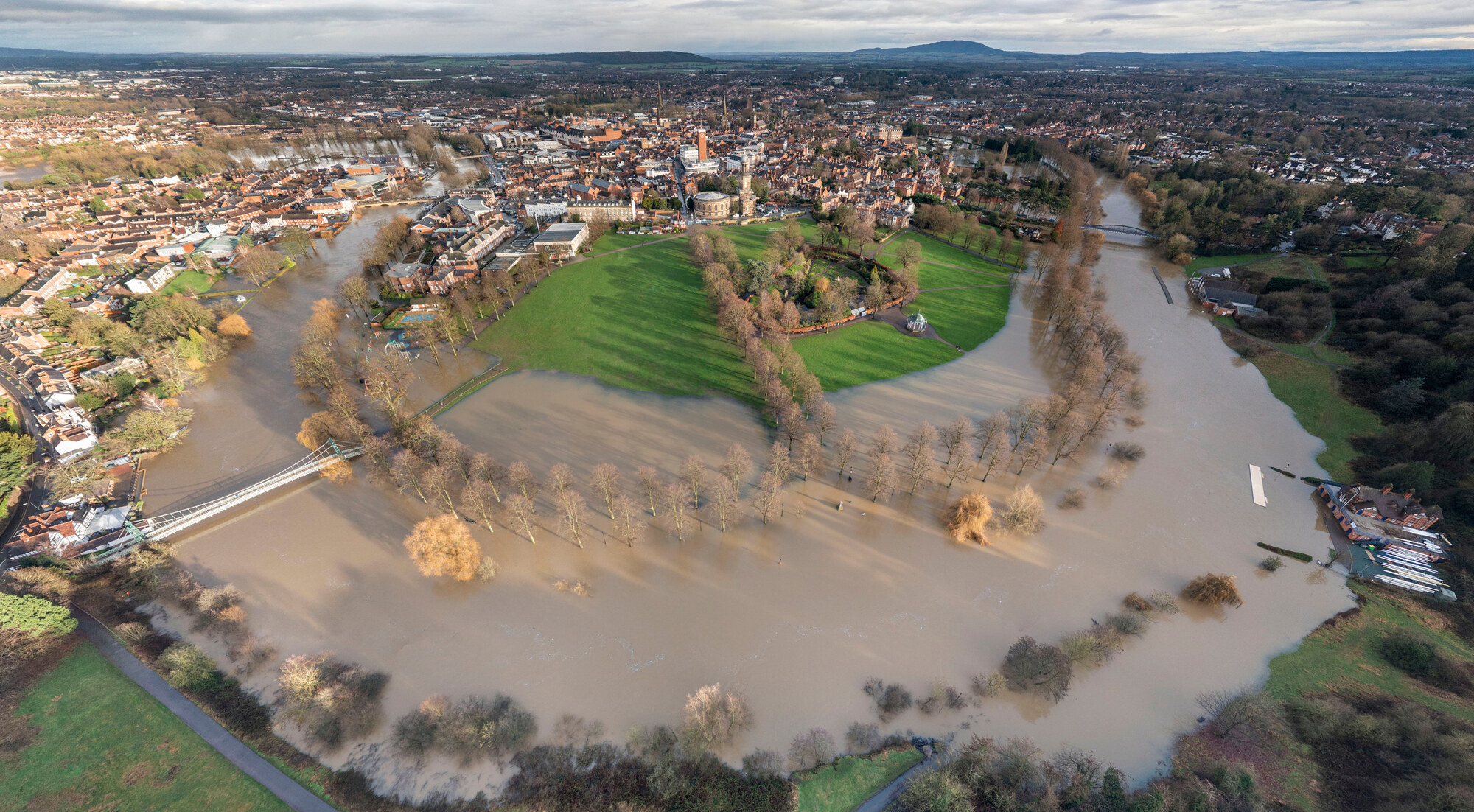

Flood warnings use distinct levels: an alert is a signal to prepare. A warning means flooding is expected. A severe warning means flooding could threaten life and cause significant disruption. The words are not interchangeable: each describes a different level of risk and the action people should take.
Explainer | Sources checked 4 October 2026.
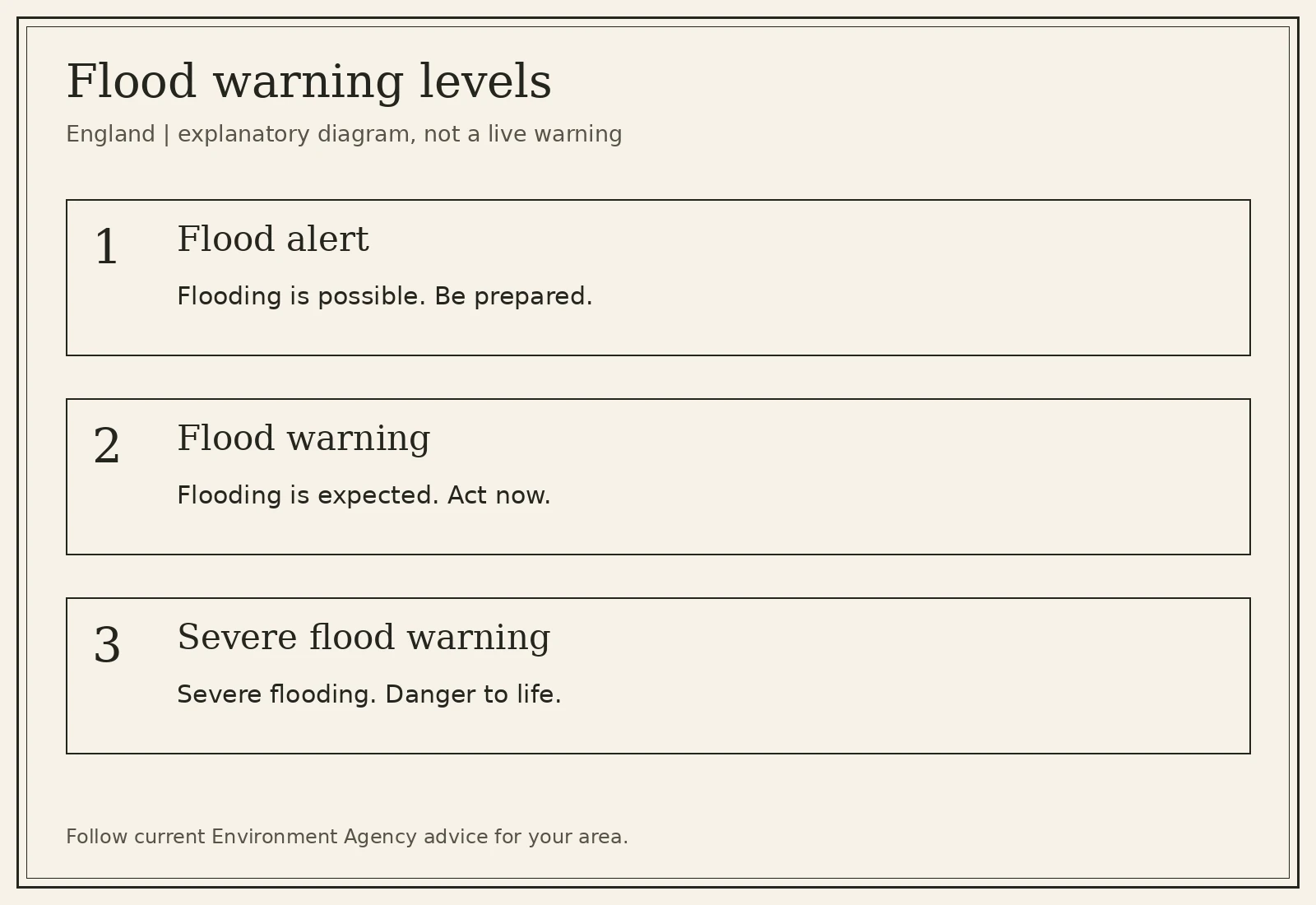
Text version of the diagram: Flood warnings explained: three Environment Agency flood warning levels in England, alert, warning and severe warning.
Flood warnings: prepare, act, protect
In England, the Environment Agency advises people receiving a flood alert to have their flood plan ready, gather insurance documents and medication, and avoid walking, cycling or driving through floodwater. A flood warning calls for immediate action, including moving family, pets and valuables to safety. A severe flood warning means following advice from emergency services and being ready to evacuate.
A severe warning can be issued before, during or after flooding. It is not simply the last step in a timetable that everyone will have time to follow. The agency says people should take all flood warnings seriously.
Where to check flood warnings
The government flooding service for England provides current warnings and alerts, water and rainfall levels, and information about flood risk in the next five days. There are separate services for Wales, Scotland and Northern Ireland. A warning in one nation's system should not be assumed to describe conditions elsewhere. Checking the official service is the safest way to see which flood warnings apply to your area.
For surface-water or flash flooding in England, GOV.UK directs people to their local council. Flooding can happen away from rivers and the sea, so a familiar route is not proof that a journey is safe.
A guide, not a live bulletin
This explainer does not report current warnings for any location. Check the official service for your area and follow local emergency advice. Preparing a personal flood plan before it is needed is part of the Environment Agency's advice to people in flood-risk areas. Flood warnings can change quickly, so rely on the official service for current ones.
Flood warnings belong in a plan, not just a feed
The Environment Agency's personal flood plan turns the warning system into practical preparation. It asks people to record useful contacts, think about who can help them and who might need their help, and prepare a kit. Important documents, warm and waterproof clothing, drinking water, medicines and a charged phone are among the items it suggests. The plan also asks people to consider arrangements for pets.
The point is to make decisions before an emergency narrows the options. Keeping insurance contacts and essential documents somewhere accessible is different from trying to find them after water has entered a property. The agency advises storing important possessions and documents where floodwater will not damage them, including waterproof protection where appropriate.
An alert is not a promise about timing
Flood warnings are instructions about risk and action, not a guaranteed countdown. Flood warnings describe risk, so a gap between messages does not mean the danger has passed.
The warning guidance gives typical timeframes, but severe warnings can be issued before, during or after flooding. The safest reading is the stated risk and official instruction, rather than a personal assumption that another warning must arrive first. The same caution applies when checking a neighbouring area: local conditions, rather than the wording alone, determine what is happening at a particular address.
After a flood, the personal plan advises people not to return home until they are told it is safe. Floodwater can contain sewage and conceal dangers. The agency says gas or electricity engineers may need to check supplies before they are switched back on. A fall in water levels is therefore not the same as confirmation that a property is safe to use.
Keep the official information close
Keep a route to the official warning service and the local authority alongside your plan. Online guidance is useful background, but it cannot assess the safety of your home or replace emergency instructions. This article explains the system as documented on the date below; it is not a substitute for a live warning, professional assessment or an evacuation instruction.
Sources
- Environment Agency: warning levels and actions
- GOV.UK: check flooding and links to the nations' services
- Environment Agency: personal flood plan
Related explainers
- Local library services: beyond the bookshelf and into digital borrowing
- How a bill becomes law: from parliamentary proposal to implementation