Isambard Kingdom Brunel: the Great Eastern beyond the famous portrait
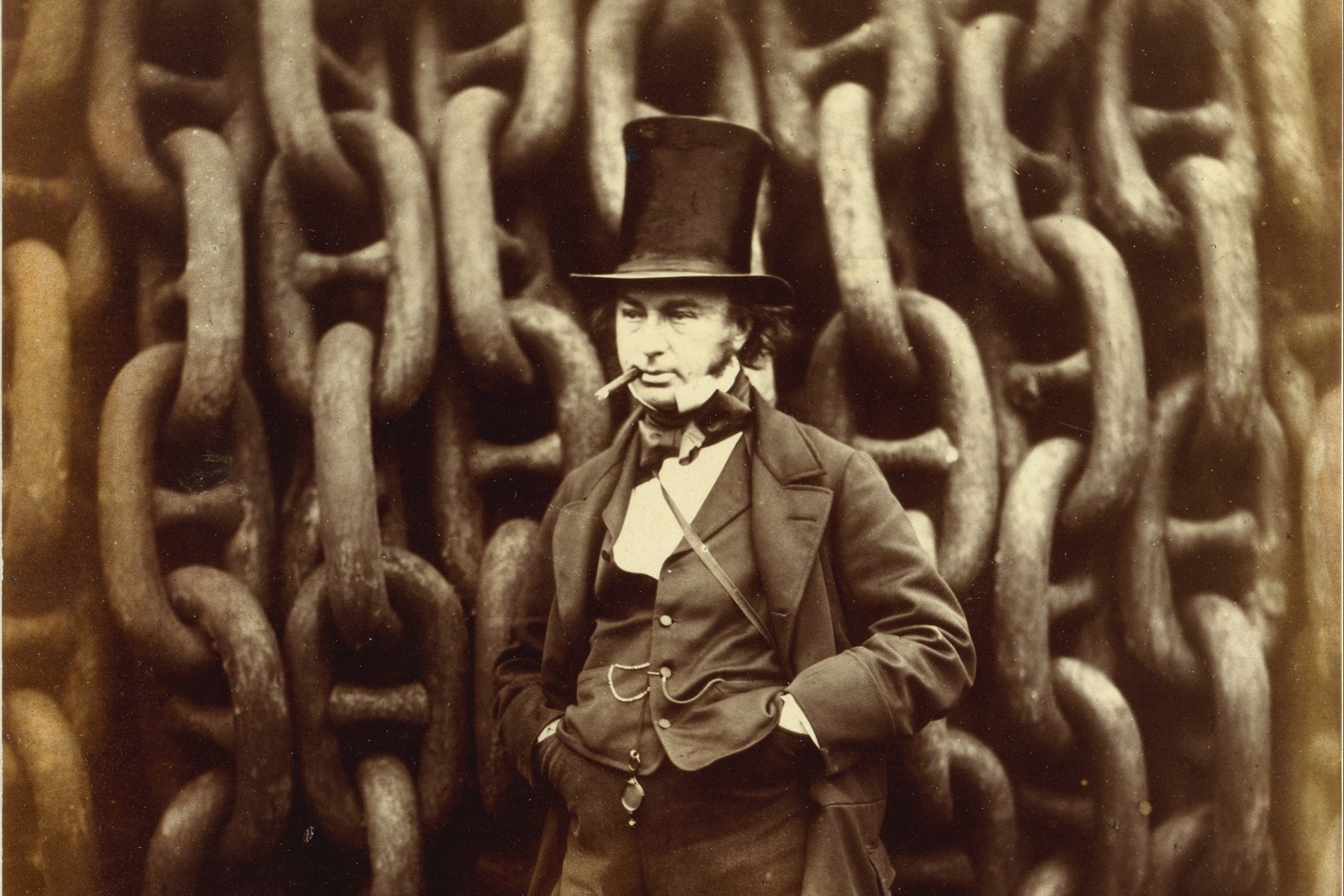
The portrait of Isambard Kingdom Brunel in front of enormous launching chains is a familiar image of Victorian engineering. The top hat, cigar and muddy clothes suggest confidence backed by practical work. The ship behind that image, however, had a more complicated career than a simple story of triumph.
The Great Eastern was the largest ship in the world when launched in 1858. It failed commercially as a passenger vessel, then found an important new role laying telegraph cables. Its history separates building something extraordinary from finding a use that could justify it.
What Isambard Kingdom Brunel’s portrait shows
Robert Howlett photographed Isambard Kingdom Brunel beside the chains used in launching the ship. The Metropolitan Museum of Art’s record dates the photograph to 1857 and its particular print to 1863-64, after the deaths of both photographer and engineer.
Those are different dates: the museum’s print is not evidence that Brunel was still supervising work in the 1860s. The chains were wrapped around large checking drums to restrain the ship during its difficult sideways launch.
The portrait records the scale of that undertaking. It does not tell us whether the ship’s later passenger business would work.

A huge ship, but not a passenger success
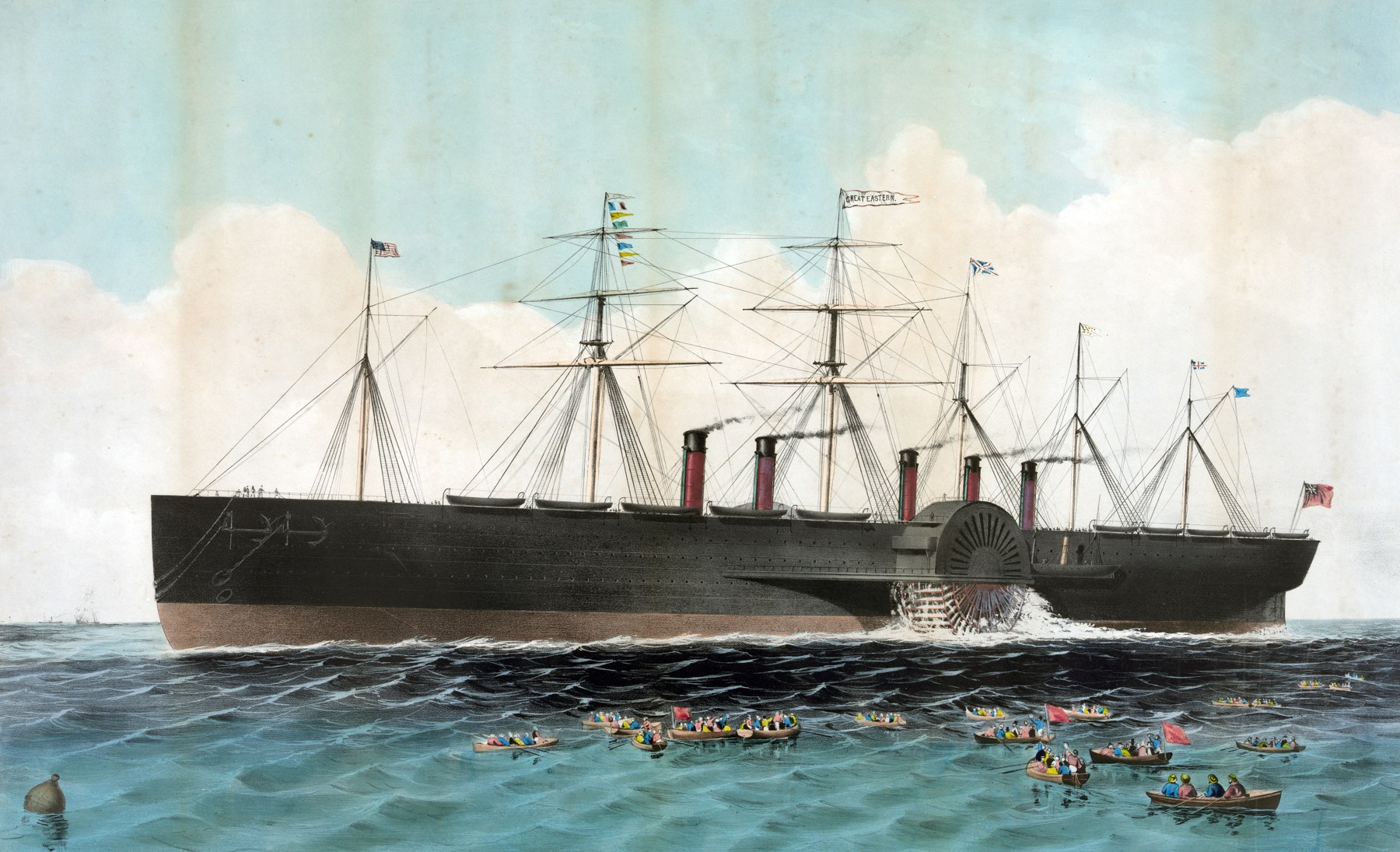
For Isambard Kingdom Brunel, the ship was a huge gamble. The Royal Museums Greenwich catalogue describes the Great Eastern as built at John Scott Russell’s yard at Millwall on the Thames. It measured 692 feet in length and combined sail, screw propulsion and paddle wheels.
The catalogue calls it a commercial failure as a passenger ship. The Met likewise records unsuccessful passenger service followed by a change of purpose. Size and ambitious design were therefore not guarantees of a successful shipping business.
It is worth keeping those judgments separate. A ship can be an important engineering achievement without meeting the commercial expectations of its original owners.
The Great Eastern found another job
After the death of Isambard Kingdom Brunel, the ship was sold and converted for cable laying. Its enormous capacity, difficult to put to profitable use in passenger service, now answered a different problem: carrying the cable needed for a long ocean crossing.
The Institution of Engineering and Technology’s archive account says the Great Eastern was chosen for the Atlantic expedition because it had sufficient room for the vast cable drums.
The 1865 attempt did not complete the connection. Faults had to be repaired during the voyage, and the cable eventually snapped and disappeared overboard. Attempts to recover it failed before the expedition had to move on.
In 1866, a new cable was successfully laid. The earlier cable was also recovered and completed, leaving two links across the Atlantic. This was not the first cable ever laid there: the 1858 connection had failed soon after installation.
Isambard Kingdom Brunel and more than one verdict
The ship’s second career does not erase its first commercial failure. Nor does that failure make its later work unimportant. Both belong in an account of the same vessel.
Another engineering story is told in how Michael Faraday found electromagnetic induction.
Isambard Kingdom Brunel’s famous portrait can introduce the story, but it should not supply the ending. The Great Eastern shows how a design’s value can change when people adapt it to a different task, with success depending on much more than one engineer or one machine.