Charles Darwin: what survival of the fittest really means

Science explained: Charles Darwin
The name of Charles Darwin is closely associated with evolution, but a familiar phrase can get in the way of understanding it. ‘Survival of the fittest’ sounds as though nature always rewards the strongest, fastest or most aggressive individual.
That is not what fitness means in this context. The Natural History Museum’s explanation describes a fit organism as one adapted to its environment. A useful characteristic in one set of conditions may be less useful when those conditions change.
Charles Darwin and natural selection
Natural selection is a mechanism of evolution. Where inherited differences affect survival and reproduction, some characteristics are more likely to pass to the next generation. Over generations, that can change a population.
The environment matters. Access to food, exposure to predators and other conditions help determine which characteristics confer an advantage. There is no single league table on which all organisms compete for the same prize.
Nor does an individual acquire a useful inherited characteristic simply by needing it. The museum distinguishes natural selection from the idea that a characteristic gained through effort during an individual’s life will automatically be inherited by its offspring.
Charles Darwin, Wallace and a shared theory
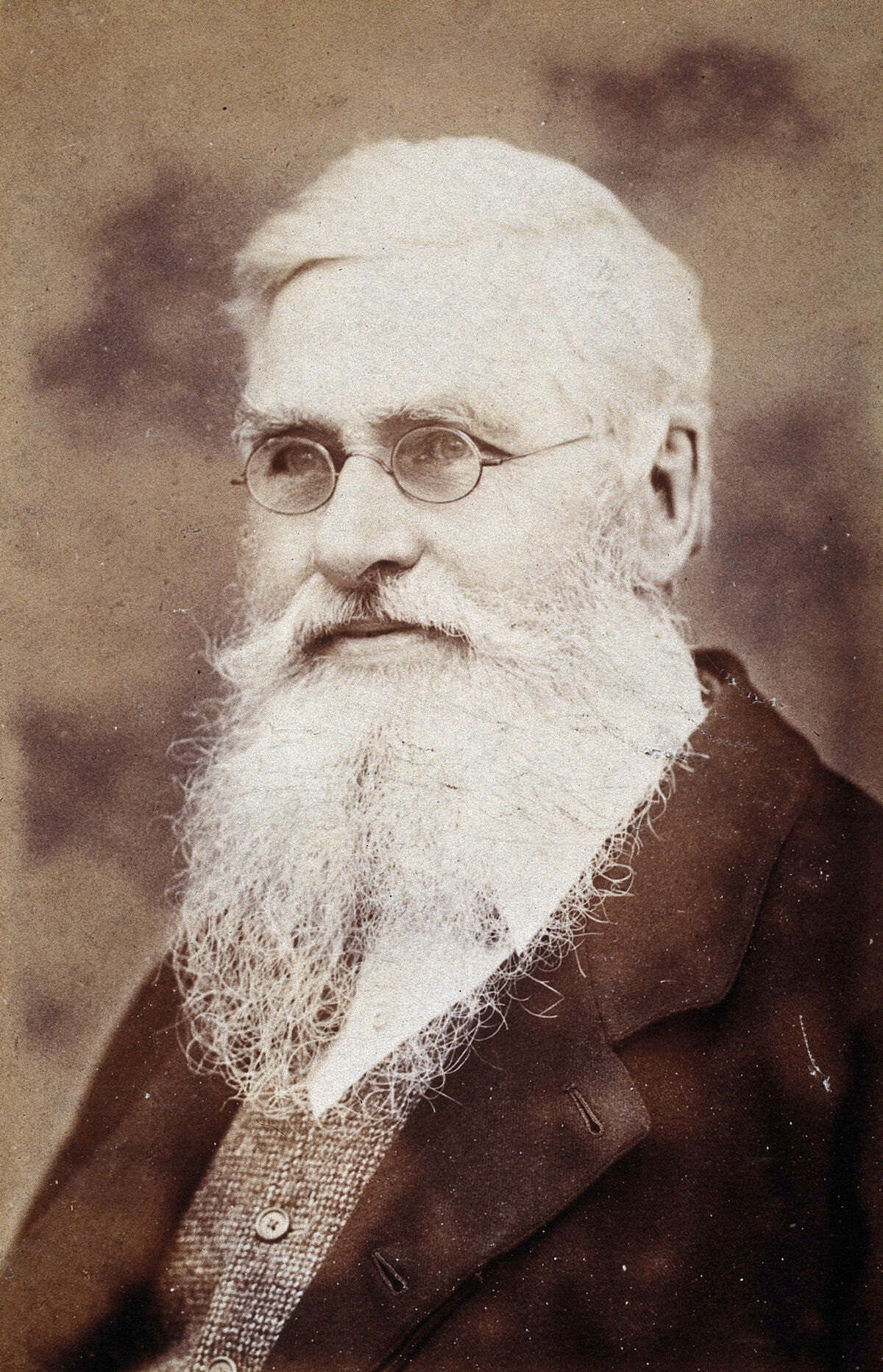
The Natural History Museum credits Charles Darwin and Alfred Russel Wallace jointly with the theory of evolution by natural selection. They co-published on it in 1858, before Darwin’s On the Origin of Species appeared in 1859.
Darwin’s later fame can obscure Wallace’s contribution. Keeping both names in the account is a useful correction to the habit of treating scientific ideas as the work of one isolated person.
Another familiar story needs care too. Darwin’s Galapagos finches are often presented as the source of an instant insight. The museum instead points to differences among mockingbirds as important to his developing thoughts. It says the theory took several years to develop, rather than arriving fully formed during the voyage of HMS Beagle.
Natural selection is not all of evolution
The museum also warns against treating selection as the only cause of evolutionary change, a point worth remembering whenever Charles Darwin is credited with the whole story. Genetic drift and gene flow can change populations, and mutations need not always be beneficial or harmful.
A Royal Institution lecture by Jonathan Pettitt explores why accounts of evolution need to make room for processes beyond natural selection. Its focus on genetic drift is a reminder that not every feature should be explained by an assumption that it must be an improvement.
That does not make natural selection unimportant. It means an explanation should identify the process involved instead of making one phrase do every job. Our explainer on Florence Nightingale and the evidence behind her charts shows the same habit of reading a famous story against the sources.
Why the wording matters
Calling an organism ‘fit’ is not a moral judgement. It does not mean that it deserves to survive, is superior in every respect or represents a final stage of progress. It describes a relationship between characteristics and conditions.
Those conditions can change, which is why the account of Charles Darwin and Wallace is not a ranking of winners. The museum notes that something which once helped an organism can cease to be useful in a different environment. It also explains that evolutionary change can sometimes be rapid, even though Darwin thought of natural selection as proceeding slowly over long periods.
Reading Charles Darwin carefully starts with setting aside a sporting interpretation of ‘fittest’. The question is not who would win a contest. It is how inherited differences, reproduction and a changing environment alter populations over time.